

 By
By The US payment to United Nations 2026 but critics and U.N. officials say it barely scratches the surface. As TrendingUpdatesToday.com continues to track developments in U.S. foreign policy and global institutions, this story raises urgent questions about the future of international cooperation and American multilateral commitments.
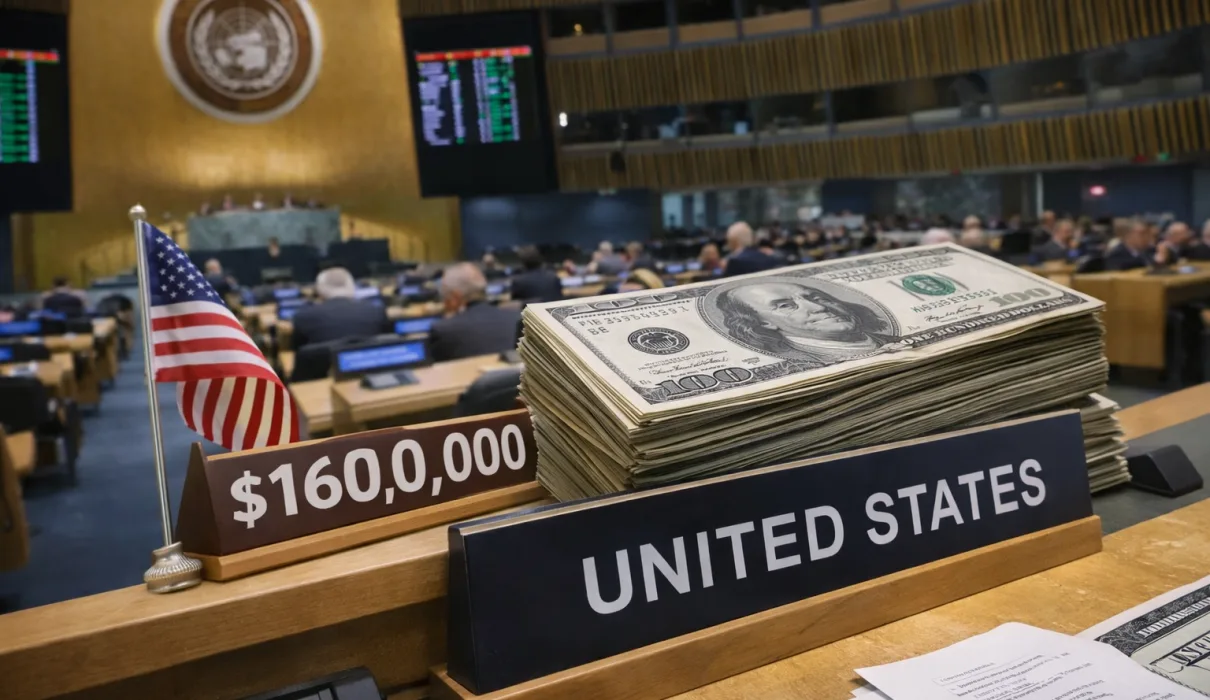
On February 19, 2026, the U.N. confirmed that the Trump administration transferred approximately $160 million toward its outstanding obligations to the world body — a figure that represents only a fraction of the nearly $4 billion the U.S. currently owes.
Breaking Down the US Payment to United Nations 2026
The United States’ financial obligations to the U.N. fall into two distinct categories, both of which have ballooned under the current administration.
According to U.N. officials, the U.S. owes approximately $2.196 billion to the organization’s regular operating budget — including $767 million assessed for 2026 alone. Additionally, the U.S. owes roughly $1.8 billion to the separate peacekeeping budget, which funds the 11 active U.N. peacekeeping missions currently operating worldwide with more than 60,000 personnel.
The $160 million payment confirmed by U.N. spokesman Stéphane Dujarric has been earmarked for the regular operating budget. No payment has been indicated for the peacekeeping shortfall.
A Year of Zero Payments — Then a Partial Down Payment
The Trump administration made no payments to the United Nations throughout all of 2025. Ambassador Mike Waltz had previously signaled that a “significant down payment” on arrears was forthcoming, but the $160 million figure — while a start — falls well short of what U.N. officials say is needed to stabilize the organization’s finances.
U.S. Accounts for 95% of Regular Budget Arrears
U.N. officials have confirmed that the United States is responsible for 95% of all outstanding dues to the regular budget. The second-largest debtor is Venezuela, which owes approximately $38 million — a figure that underscores just how outsized the American shortfall truly is. Venezuela has already lost its General Assembly voting rights for being more than two years in arrears.
What the Numbers Really Look Like
| Category | Amount Owed | Payment Made |
| UN Regular Budget (total) | $2.196 billion | ~$160 million |
| UN Regular Budget (2026 only) | $767 million | Partial |
| UN Peacekeeping Budget | $1.8 billion | $0 |
| Total Outstanding | ~$4 billion | ~$160 million |
The UN’s Financial Crisis Is Real — and Deepening
U.N. Secretary-General António Guterres has repeatedly warned that the organization faces “imminent financial collapse” unless member states fulfill their obligations. In a letter to all 193 member nations, Guterres cautioned that cash reserves for the regular operating budget could run dry by July 2026 — a scenario that could force operational shutdowns, including potentially closing the U.N.’s New York headquarters.
The U.N.’s annual budget for 2026 totals $3.45 billion, covering humanitarian operations, international development programs, and peace and security initiatives. The U.S., as the world’s largest economy, is assessed at 22% of the regular budget. China follows at approximately 20%, with Japan a distant third at 6.9%.
US Withdrawal from Key UN Bodies
The financial strain is compounded by the Trump administration’s broader disengagement from multilateral institutions. The administration has withdrawn from the World Health Organization, the cultural agency UNESCO, and pulled funding from dozens of other U.N.-affiliated programs — moves that have further strained the world body’s capacity and credibility.
Simultaneously, President Trump unveiled the “Board of Peace,” a new diplomatic initiative widely viewed as a potential rival framework to U.N.-led conflict resolution mechanisms.
What Happens If the US Doesn’t Pay in Full?
Under Article 19 of the U.N. Charter, member states that fall two or more years behind on their assessed contributions risk losing their General Assembly voting rights. However, the United States — as a permanent member of the Security Council — occupies a unique structural position that makes any formal penalty politically complex and diplomatically sensitive.
That said, the practical consequences of continued non-payment are already being felt. In October 2025, the U.N. Secretary-General requested all peacekeeping missions to cut expenditures by 15% and repatriate 25% of uniformed personnel — a direct response to the funding shortfall.
Conclusion
The U.S. payment of $160 million is a step, but with nearly $4 billion still outstanding, the United Nations remains in a precarious financial position. Whether the Trump administration intends to make additional, larger payments — or use its financial leverage as a geopolitical tool — remains to be seen. Stay informed on this developing story and its implications for global governance at TrendingUpdatesToday.com.
Frequently Asked Questions
1. How much does the United States owe the United Nations in 2026? The U.S. owes nearly $4 billion to the U.N., split between approximately $2.196 billion for the regular operating budget and $1.8 billion for peacekeeping operations.
2. Why did the US stop paying United Nations dues? The Trump administration made no payments to the U.N. throughout 2025 amid broader policy disagreements with multilateral institutions and as part of a wider review of U.S. participation in international organizations.
3. What is the UN’s financial collapse warning about? Secretary-General Guterres warned that the U.N.’s regular budget cash could run out by July 2026 if member states — particularly the United States — do not pay their assessed contributions, potentially shutting down core operations.
4. What percentage of the UN budget does the US pay? The U.S. is assessed at 22% of the U.N.’s regular budget — the largest share of any single member state — and approximately 26.15% of the peacekeeping budget (though Congress has capped actual contributions at 25%).
5. Can the UN punish the US for not paying its dues? Under Article 19 of the U.N. Charter, countries two years behind on dues can lose General Assembly voting rights. However, as a permanent Security Council member, the U.S. faces unique diplomatic and structural considerations that complicate any formal enforcement.
Sources
- Associated Press / U.S. News & World Report: US Pays About $160 Million of the Nearly $4 Billion It Owes the United Nations
- NBC News: UN Waiting to See How Much US Intends to Pay
- ABC News: UN Waiting on US Payment
- Congressional Research Service / Congress.gov: U.S. Funding to the UN System
- United Nations Press Office: UN Cash Situation Update
- World Population Review: UN Funding by Country 2026