

 By
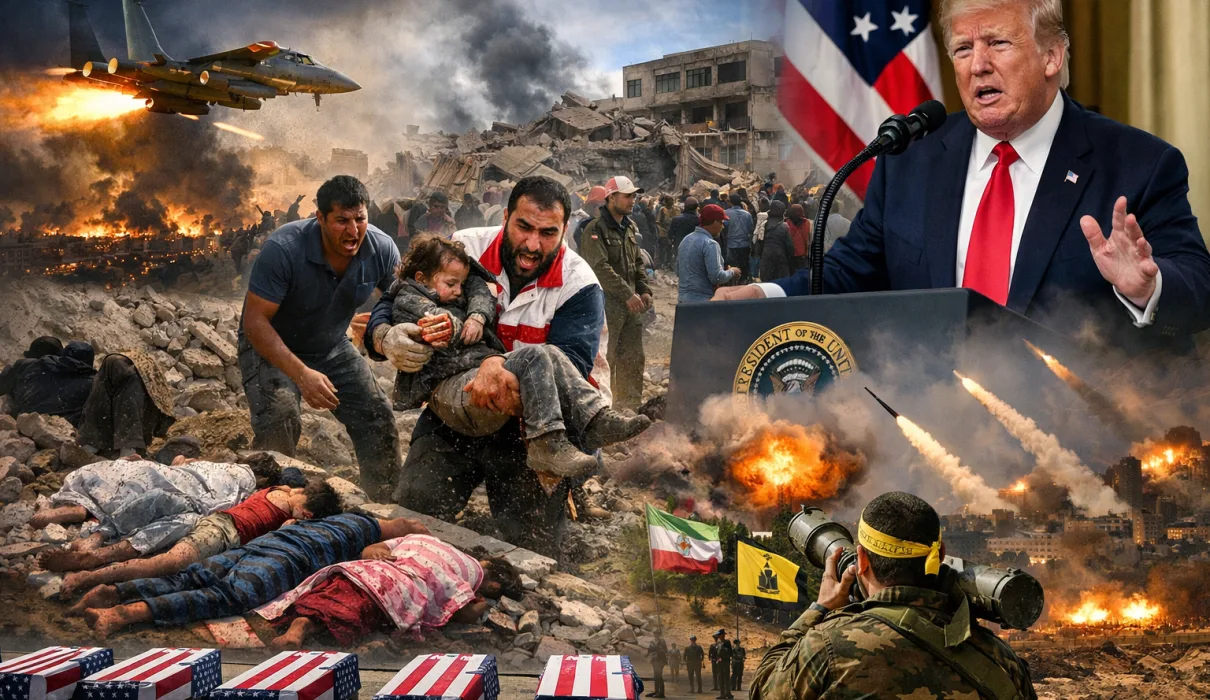
By The US-Israel war with Iran has entered its fourth day — and it is spreading fast. As TrendingUpdatesToday.com tracks this rapidly evolving crisis, Iran is now firing hundreds of missiles and drones at Gulf nations, six American troops are dead, gas prices have jumped, and President Trump says he has no timeline for ending the fight.
Here is everything you need to know about the latest developments in the US-Israel war with Iran.
What Triggered the US-Israel War with Iran?
Before the US-Israel war with Iran began on February 28, 2026, President Trump had been pushing for a nuclear deal with Tehran. When diplomacy stalled, he ordered strikes. Trump outlined four core goals for the campaign:
- Destroying Iran’s ballistic missile capabilities
- Eliminating Iran’s naval power
- Preventing Iran from building nuclear weapons
- Cutting off Iran’s funding and arming of proxy forces across the region
A senior administration official confirmed the operation — called Operation Epic Fury — will continue until all four goals are met. Trump submitted a formal War Powers Resolution notice to Congress on March 2, citing Iran’s threat to U.S. forces, regional allies, and maritime traffic through the Strait of Hormuz.
Day 4 Snapshot: Key Developments at a Glance
| Category | Detail |
| U.S. troops killed | 6 (in Kuwait) |
| U.S. troops seriously wounded | 18 |
| Estimated Iranian deaths | 787+ (likely thousands) |
| Iran missile launchers destroyed | ~50% of ~500 total |
| Gulf nations under fire | UAE, Qatar, Saudi Arabia, Kuwait, Bahrain, Oman |
| Countries Americans urged to leave | 14 |
| U.S. embassies closed | Kuwait, Saudi Arabia |
| National average gas price | $3.11/gallon (up from $2.88 a month ago) |
Gulf States Take Heavy Fire — And They’re Pushing Back
One of the most alarming turns in the US-Israel war with Iran is how aggressively Tehran has targeted its Gulf neighbors. Iran has launched missiles and drones at every Persian Gulf state, hitting luxury hotels in Dubai, residential areas in Doha, energy infrastructure in Kuwait, and seaports in Oman.
The UAE confirmed that 186 ballistic missiles were launched at the country since the war started. Its air defenses destroyed 172 of them. Three people were killed in the attacks.
Qatar shot down two Iranian Su-24 fighter jets — the first time it has done so — and warned Iran that the attacks “will not go unanswered, and today all options are open.”
Saudi Arabia saw its national oil refinery at Ras Tanura targeted, and the U.S. Embassy in Riyadh was struck by two Iranian drones, causing a small fire. The embassy closed Tuesday.
Iran’s strategy appears to be backfiring. Rather than pressuring Gulf monarchies to push Washington to end the US-Israel war with Iran, it is pushing them closer to joining the fight.
Iran Strikes Natanz Nuclear Facility — IAEA Confirms Damage
For the first time since the joint assault began, it has been confirmed that one of Iran’s key nuclear sites was hit. The United Nations’ International Atomic Energy Agency (IAEA) confirmed damage to entrance buildings at the Natanz Fuel Enrichment Plant based on satellite imagery.
The IAEA noted no radiological risk from the latest strikes. However, its director general had warned just before the war that enriched uranium — hundreds of pounds of it — was still present underground at Iranian sites, despite U.S. bombings in June 2025. That material remains a proliferation concern regardless of the current US-Israel war with Iran.
Trump Says Iran Wants to Talk — But He Refused
Even as the US-Israel war with Iran intensifies, Trump revealed that Iranian leadership had reached out seeking negotiations. He turned them down, posting on Truth Social that their air defenses, air force, navy, and leadership were “gone” and that it was “too late” for talks.
Just days before, Trump had told The Atlantic he was willing to negotiate. The shift signals a harder U.S. stance as Operation Epic Fury gains momentum.
Trump also said the US-Israel war with Iran could last well beyond his original four-to-five-week estimate, telling reporters at the White House: “Whatever it takes — we have the capability to go far longer than that.”
Americans Urged to Leave 14 Countries — Embassies Shut Down
The U.S. State Department has told Americans to leave 14 countries across the Middle East immediately, citing “serious safety risks” from the ongoing Middle East conflict 2026. The countries include:
Bahrain, Egypt, Iran, Iraq, Israel, the West Bank, Gaza, Jordan, Kuwait, Lebanon, Oman, Qatar, Saudi Arabia, Syria, the UAE, and Yemen.
U.S. embassies in both Kuwait and Saudi Arabia are closed until further notice. The U.S. Ambassador to Israel, Mike Huckabee, said options for Americans leaving Israel are “VERY LIMITED,” with buses to Egypt as the primary route.
Iran War Latest Updates Today: Israel Enters Lebanon Again
Israel sent troops into southern Lebanon on Day 4, ordering residents in at least 80 communities to evacuate. The IDF said the move was designed to create a defensive buffer as Hezbollah — backed by Tehran — joined in retaliatory attacks across the region.
Israel also accused Iran of war crimes after it allegedly used cluster munitions in missile strikes on civilian areas of central Israel. Five people were injured in the latest salvo.
Why Is the US Attacking Iran in 2026? The Bigger Picture
Understanding the why is the US attacking Iran in 2026 question requires looking at years of escalating tension. Iran’s nuclear program, its ballistic missile buildup, and its funding of groups like Hamas, Hezbollah, and the Houthis all factored into Trump’s decision. The U.S. struck Iran’s nuclear facilities in a prior operation (Midnight Hammer) in June 2025, but the IAEA confirmed enriched uranium remained stockpiled.
Iran War Impact on Gas Prices
The Iran war impact on gas prices is already being felt at the pump. According to AAA, the national average for a gallon of regular gas climbed to $3.11 on Tuesday, the first time it has crossed $3 since late November 2025. Just a month ago, the average was $2.88. Analysts expect further increases if the conflict widens or disrupts Strait of Hormuz shipping.
5 FAQs About the US-Israel War with Iran
1. When did the US-Israel war with Iran start? The joint U.S.-Israeli assault on Iran began on February 28, 2026, in an operation called “Operation Epic Fury.”
2. How many Americans have been killed in the US-Israel war with Iran? Six U.S. service members have been killed, all struck by Iranian fire in Kuwait. Eighteen others have been seriously wounded.
3. Why are Gulf states being targeted in the Iran missile attacks? Iran views Gulf nations that host U.S. military bases as participants in the conflict against it, making them targets for retaliatory strikes.
4. Is the US-Israel war with Iran at risk of expanding? Yes. Qatar, the UAE, and Saudi Arabia have all warned they reserve the right to respond militarily to Iranian attacks on their soil.
5. What is happening at Iran’s nuclear facilities during this war? The IAEA confirmed damage to the Natanz Fuel Enrichment Plant entrance. However, large stockpiles of enriched uranium remain underground in Iran and are not expected to cause radiological risk from the strikes.
Conclusion
The US-Israel war with Iran is one of the most significant military conflicts of the decade — and it is escalating by the hour. Gulf nations are moving from bystanders to potential combatants. Iran’s nuclear sites are under fire. Americans are being evacuated across the region. And President Trump has made clear: there is no end date yet.
Stay with TrendingUpdatesToday.com for real-time updates, analysis, and breaking developments on the US-Israel war with Iran as this crisis continues to unfold.
Sources
- CBS News Live Updates: US-Israel War with Iran, Day 4 https://www.cbsnews.com/
- U.S. Central Command (CENTCOM) https://www.centcom.mil/
- International Atomic Energy Agency (IAEA) https://www.iaea.org/
- AAA Gas Prices https://gasprices.aaa.com/
- U.S. State Department Travel Advisories https://travel.state.gov/
- UAE Ministry of Defense Official Statement https://www.mod.gov.ae/
- Qatar Ministry of Defense https://www.mod.gov.qa/
- The Atlantic (Trump Iran Attack Negotiations) https://www.theatlantic.com/
- World Health Organization (WHO) https://www.who.int/
- United Nations Charter, Article 51 (Right of Self-Defense) https://www.un.org/en/about-us/un-charter/full-text