

 By
By The United States is making a bold move to lead the world in artificial intelligence — and US AI exports are now at the center of that strategy. At TrendingUpdatesToday.com, we cover the stories shaping tomorrow’s tech landscape, and this one matters deeply.
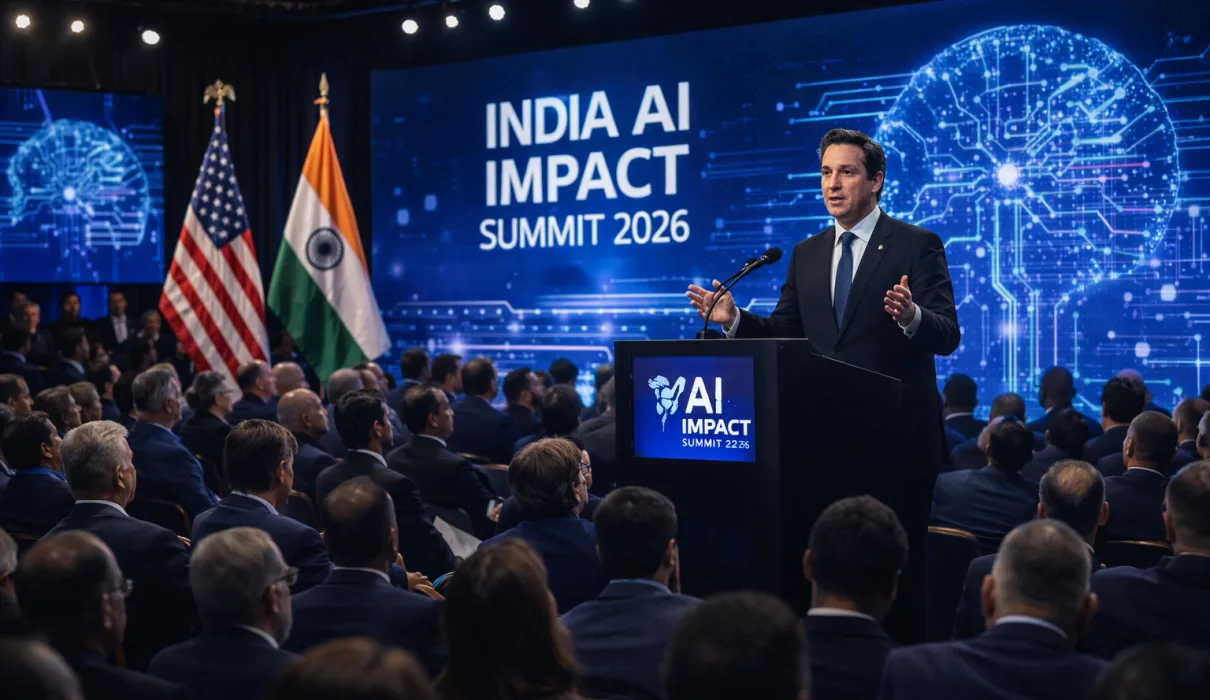
On February 23, 2026, Michael Kratsios, Director of the White House Office of Science and Technology Policy (OSTP), addressed the India AI Impact Summit 2026. He laid out the Trump administration’s vision for expanding US AI exports and accelerating AI adoption among allied and developing nations.
Here is everything you need to know.
What Did Kratsios Say About US AI Exports?
Kratsios spoke clearly: America wants its allies to use American AI — and to own it.
He described AI sovereignty as nations building their futures on the best available technology while keeping sensitive data within their own borders. His remarks pushed back hard against centralized global AI governance, arguing that countries should pursue strategic autonomy through direct partnerships with the United States.
“Real AI sovereignty means owning and using best-in-class technology for the benefit of your people,” Kratsios said.
He encouraged developing nations to deploy AI quickly in healthcare, education, agriculture, energy, and government services. This vision sits at the core of the administration’s AI adoption strategy.
What Is the American AI Exports Program?
The American AI Exports Program is the flagship initiative powering this push. The Department of Commerce’s International Trade Administration launched it in October 2025 to grow the global reach of US AI technology partnerships.
The program identifies industry-led export packages — including AI hardware, software, models, and applications — and promotes them to markets worldwide. It directly implements an executive order focused on expanding the US AI technology partnerships that reinforce American leadership abroad.
For developing countries, this creates a practical path. They can build on the “American AI stack” without surrendering control of their own data or digital infrastructure.
New AI Initiatives Announced at the India Summit
Kratsios announced several new programs at the summit to support global AI adoption. Here is a quick breakdown:
| Initiative | Lead Agency | Purpose |
| National Champions Initiative | Dept. of Commerce | Integrates partner-country AI companies into US export stacks |
| U.S. Tech Corps | Peace Corps | Deploys tech volunteers to help countries use AI in public services |
| World Bank AI Fund | Dept. of Treasury | Helps nations overcome barriers to AI adoption |
| AI Agent Standards Initiative | NIST (CAIS&I) | Builds interoperable, secure standards for agentic AI systems |
Each program targets a different barrier to global AI adoption, from funding gaps to technical expertise to standards alignment.
The National Champions Initiative stands out. It will incorporate leading AI companies from partner countries into customized American AI export stacks, giving local firms a seat at the table while still anchoring the tech to US platforms.
The U.S. Tech Corps, housed under the Peace Corps, will send volunteer technical experts to partner nations. These experts will support the real-world deployment of AI in schools, clinics, and government offices — turning policy into practice.
Why the India AI Impact Summit Matters
India is one of the world’s fastest-growing technology markets. Hosting this summit there sent a clear signal: the US sees India as a cornerstone of its AI adoption strategy for the Indo-Pacific region and beyond.
The Michael Kratsios AI agenda aligns closely with broader US foreign policy goals. It offers countries an alternative to China’s AI infrastructure push — one built on democratic values, data sovereignty, and open standards.
For the Trump administration, US AI exports are not just about economics. They are a geopolitical tool. Countries that adopt the American AI stack become deeper technology partners, creating lasting ties across defense, commerce, and diplomacy.
The NIST AI Agent Standards Initiative also signals a forward-looking move. Agentic AI — systems that act autonomously on behalf of users — is the next frontier. Setting interoperable standards now helps ensure US leadership as that technology matures.
Conclusion
The United States is not waiting for the world to come to it. Through the American AI Exports Program, the U.S. Tech Corps, the National Champions Initiative, and a new World Bank fund, the Trump administration is actively building the infrastructure for US AI exports to power the next decade of global growth.
AI sovereignty, partnership, and practical deployment are the pillars of this plan. For allied nations, this is an opportunity to build on proven technology while staying in control of their own digital futures.
TrendingUpdatesToday.com will continue tracking how the US AI exports agenda develops and what it means for countries choosing a technology partner in an increasingly competitive world.
Frequently Asked Questions
1. What is the US AI exports strategy under the Trump administration? The Trump administration’s US AI exports strategy focuses on promoting American AI hardware, software, and models to allied and developing nations through programs like the American AI Exports Program, while rejecting centralized global AI governance.
2. What is the American AI Exports Program? The American AI Exports Program is a Commerce Department initiative launched in October 2025. It packages US AI technologies for promotion in global markets, implementing an executive order that supports expanding US AI technology partnerships abroad.
3. What did Michael Kratsios announce at the India AI Impact Summit? Michael Kratsios AI policy remarks at the summit outlined four major new initiatives: the National Champions Initiative, the U.S. Tech Corps, a Treasury-led World Bank AI fund, and the NIST AI Agent Standards Initiative — all designed to accelerate global AI adoption.
4. How does AI sovereignty relate to US AI exports? AI sovereignty is the idea that nations can own and control the best AI technology rather than depending on a single global power. The US frames US AI exports as a path for partner countries to achieve AI sovereignty while building on the American AI stack.
5. How does the US AI adoption strategy target developing nations? The US AI adoption strategy encourages developing countries to deploy AI in healthcare, education, agriculture, energy, and government services. The Trump administration’s AI adoption strategy for developing nations includes technical support via the U.S. Tech Corps and financing support through a new World Bank fund, addressing both expertise and funding barriers to how the US is promoting AI adoption globally.
Sources
- White House OSTP — Remarks by Director Michael Kratsios at the India AI Impact Summit: https://www.whitehouse.gov/articles/2026/02/remarks-by-director-michael-kratsios-at-the-india-ai-impact-summit/
- White House — US Promotes AI Adoption, Sovereignty, and Exports at India AI Impact Summit: https://www.whitehouse.gov/articles/2026/02/u-s-promotes-ai-adoption-sovereignty-and-exports-at-india-ai-impact-summit/
- U.S. Department of Commerce / International Trade Administration — American AI Exports Program: https://aiexports.gov/
- National Institute of Standards and Technology (NIST) — AI Agent Standards Initiative: https://www.executivegov.com/articles/nist-ai-agent-standards-initiative-launch
- U.S. Peace Corps — Tech Corps: https://www.peacecorps.gov/ways-to-serve/tech-corps/
- ExecutiveGov — Kratsios Highlights US AI Export, Adoption Initiatives at India AI Impact Summit: https://www.executivegov.com/articles/kratsios-us-ai-export-adoption-india-summit