

 By
By Trump Tariffs Supreme Court Ruling: On February 20, 2026, the U.S. Supreme Court delivered one of the biggest blows to a sitting president’s trade agenda in modern history. The court ruled 6-3 that President Donald Trump’s sweeping emergency tariffs were illegal. Trump responded fast — and defiantly. TrendingUpdatesToday.com breaks down exactly what happened, what comes next, and how it could affect your wallet.

The Supreme Court’s Historic Tariff Ruling, Explained
The Supreme Court ruled that the International Emergency Economic Powers Act (IEEPA) does not give the president authority to impose tariffs. This struck down the legal foundation for many of Trump’s “reciprocal” tariffs — duties he had imposed on virtually every U.S. trading partner.
The ruling passed 6-3. Notably, two of Trump’s own nominees — Justices Neil Gorsuch and Amy Coney Barrett — joined Chief Justice John Roberts and the three liberal justices in the majority.
Trump called the decision “deeply disappointing” and said he was “ashamed” of the justices who ruled against him.

Trump Fires Back: The New 10% Global Tariff Under Section 122
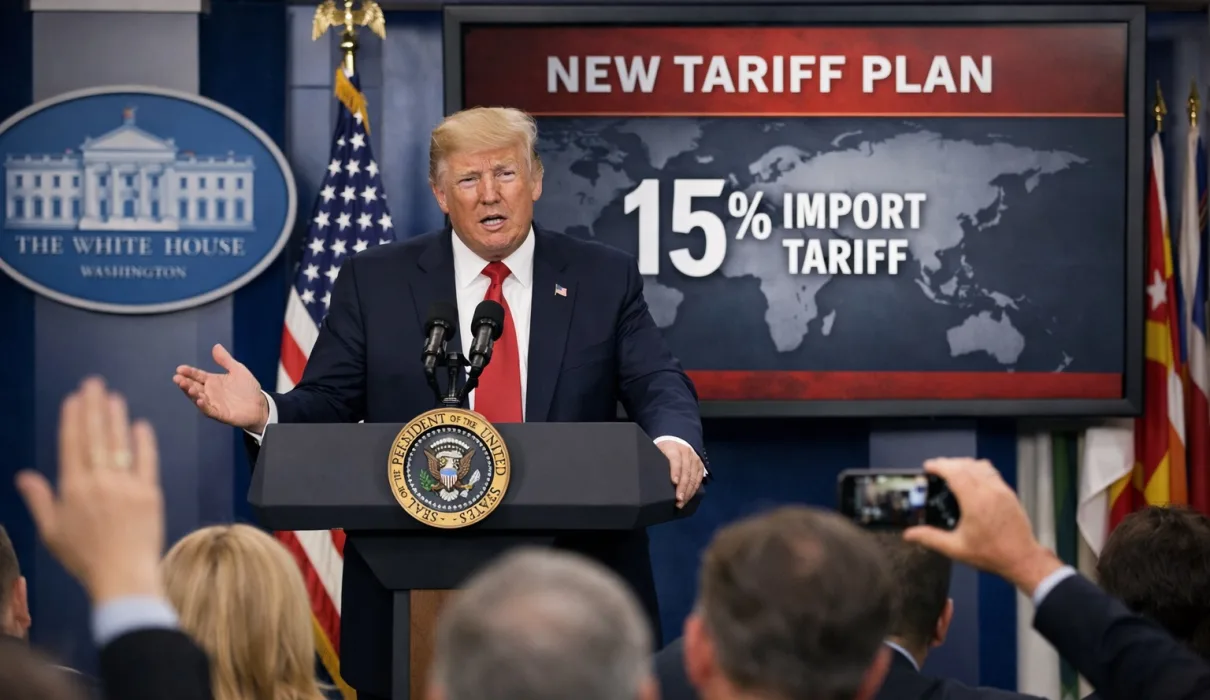
Rather than accepting the ruling, Trump signed a new executive order within hours. He imposed a 10% global tariff using Section 122 of the Trade Act of 1974 — a different legal authority than IEEPA.
Key facts about the new Section 122 tariffs:
- Rate: 10% on most imported goods
- Effective date: February 24, 2026 at 12:01 a.m. ET
- Time limit: 150 days without congressional approval
- Applies to: Most countries, with some exemptions for critical goods
Treasury Secretary Scott Bessent stated the new tariffs will produce “virtually unchanged tariff revenue in 2026,” suggesting the administration views this as a direct workaround.
How Tariff Rates Changed After the Ruling
| Country / Region | Previous IEEPA Tariff Rate | New Section 122 Rate |
| Most countries (global) | Varied (reciprocal) | 10% |
| China | 10% IEEPA + 25% other = 35% | 10% Section 122 + 25% other = 35% |
| European Union | Reciprocal rates | 10% (under review) |
| Exempted goods | Some | Agricultural, pharma, semiconductors, energy |
What About Tariff Refunds for U.S. Importers?
This is where it gets complicated. The Supreme Court’s ruling did not address whether U.S. companies must be refunded the tariffs they already paid under IEEPA. Experts estimate the refund exposure could reach hundreds of billions of dollars.
The Trump administration had informally promised refunds if the court ruled against them. But the legal process for actually claiming those refunds remains unclear. Independent economists warn the refund question could drag through courts for years.
What Americans Think: The Polling Picture
A new ABC News/Washington Post/Ipsos poll released February 22 reveals stark public opinion:
- 64% of Americans disapprove of Trump’s handling of tariffs
- 48% say the economy has gotten worse since Trump took office in January 2025
- Only 34% approve of his tariff policy
- Republicans largely support the tariffs (75% approval), while independents (72%) and Democrats (95%) oppose them
The Port of Los Angeles executive director Gene Seroka told CNN that economic uncertainty is already weighing on hiring and investment decisions: planning for talent and technology is “really tough” when businesses don’t know what the trade rules will be.
State of the Union and the DHS Shutdown
Beyond tariffs, Trump is set to deliver his State of the Union address on Tuesday, February 24 — the first of his second term before a joint session of Congress. He is expected to focus on border policy and his administration’s achievements.
Adding tension: a partial DHS shutdown is ongoing. Federal workers including TSA agents and Border Patrol have not yet missed a paycheck, but first partial checks are expected to reflect the shortfall starting February 27 if the shutdown continues.
The Bottom Line: What This Means for Consumers
The Trump tariffs Supreme Court ruling reshapes but does not end America’s trade war. Consumers should expect:
- Continued price pressures on imported goods
- Ongoing legal battles over IEEPA refunds
- Possible tariff rate changes as the administration pursues new legal pathways
- A 150-day countdown before Congress must weigh in on extending the Section 122 tariffs
The situation is fluid. For ongoing updates on the Trump trade war 2026 and its impact on American families, keep following TrendingUpdatesToday.com.
Frequently Asked Questions
- Why did the Supreme Court strike down Trump’s tariffs? The court ruled 6-3 that the International Emergency Economic Powers Act (IEEPA) does not authorize the president to impose tariffs. The majority found Trump’s use of emergency economic powers exceeded what the law permits.
- What is the new 10% global tariff under Section 122? After the IEEPA ruling, Trump signed a new 10% tariff on most imported goods using Section 122 of the Trade Act of 1974. It took effect February 24, 2026 and can last up to 150 days without Congress extending it.
- Will U.S. importers get refunds for tariffs paid under IEEPA? The Supreme Court left this question open. Businesses that paid IEEPA tariffs may pursue refunds, but the legal path for doing so is still unclear and could take years to resolve.
- How do Trump’s tariffs affect prices for consumers? Tariffs are typically passed on to buyers of imported goods. Economists and business leaders warn that continued trade war uncertainty will keep prices elevated for everyday consumer products.
- What is Trump expected to address at the 2026 State of the Union? Trump’s State of the Union on February 24, 2026 is expected to focus on border security, immigration enforcement, and his administration’s first-year achievements, amid ongoing debate over the DHS shutdown and tariff policy.
Sources
- U.S. Supreme Court ruling on IEEPA tariffs, February 20, 2026
- White House Fact Sheet: Section 122 Tariff Proclamation — whitehouse.gov
- ABC News / Washington Post / Ipsos Poll, February 22, 2026 — ipsos.com
- CNBC: Trump announces new 10% global tariff — cnbc.com
- CNN Live Updates: Trump tariffs and DHS shutdown — cnn.com
- Reed Smith Trade Compliance Resource Hub — tradecomplianceresourcehub.com