

 By
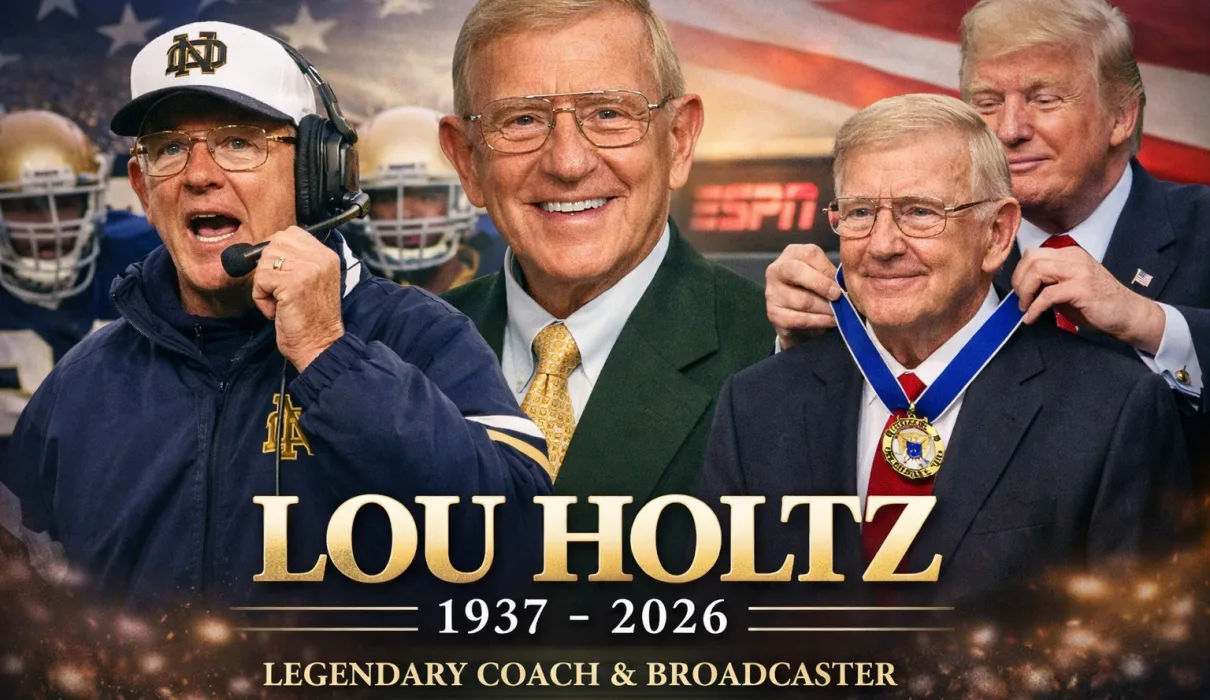
By Lou Holtz dies at age 89, and with him, college football loses one of its most iconic figures. The Hall of Fame coach passed away on March 4, 2026, in Orlando, Florida, surrounded by his family. Lou Holtz dies leaving behind a 249-win coaching career, a Notre Dame national championship, and a legacy that defined what it means to build a program from the ground up. TrendingUpdatesToday.com breaks down everything you need to know about his life, career, and lasting impact on the game.
Lou Holtz Dies: What We Know
Notre Dame released an official statement confirming that Lou Holtz died in Orlando, Florida. No cause of death was provided by the family. At his final public appearance in November 2025, Holtz had shared with friends that his health had deteriorated significantly and that he could no longer walk. Despite that, he spent nearly an hour on stage telling stories and cracking jokes — true to form until the very end.
His son Skip wrote on social media: “He was successful, but more important he was Significant.” Current Notre Dame head coach Marcus Freeman praised Holtz for the “great support” he offered since Freeman arrived in South Bend, and highlighted three values Holtz always emphasized: love, trust, and commitment.
A Coaching Career Like No Other
Lou Holtz built his coaching career across six college programs and one NFL stint, finishing with a 249-132-7 record — good for 10th all time among Division I FBS head coaches. He coached at William & Mary, NC State, Arkansas, Minnesota, Notre Dame, and South Carolina. He also led the New York Jets for the 1976 NFL season.
His coaching career spanned more than three decades and included:
- A 1988 national championship at Notre Dame (12-0 season)
- A school-record 23 consecutive wins with the Fighting Irish (1988–89)
- Nine straight January bowl appearances at Notre Dame
- Induction into the College Football Hall of Fame in 2008
- The Presidential Medal of Freedom in 2020
Lou Holtz at Notre Dame vs. Other Coaching Legends
| Coach | Record at Notre Dame | National Titles | Seasons |
| Knute Rockne | 105-12-5 | 3 | 13 |
| Brian Kelly | 113-40 | 0 | 12 |
| Lou Holtz | 100-30-2 | 1 | 11 |
| Ara Parseghian | 95-17-4 | 2 | 11 |
Why Lou Holtz Dies as One of College Football’s Greatest
The 1988 season stands as Holtz’s masterpiece. Notre Dame defeated No. 1 Miami 31-30 in a game now immortalized as “Catholics vs. Convicts,” then closed the year by beating No. 2 USC and No. 3 West Virginia in the Fiesta Bowl. The Lou Holtz Notre Dame dynasty was built on discipline, character, and belief — not just talent.
Before Holtz arrived in 1986, Notre Dame had stumbled under coach Gerry Faust. The legendary college football coach turned the program around almost instantly. By 1987, receiver Tim Brown had won the Heisman Trophy. By 1988, the Irish were national champions.
“He made that job look so easy,” former Notre Dame running back Autry Denson once said, “that some people took it for granted and thought anybody could do it.”
Rebuilding Programs Was His Superpower
Holtz’s coaching record tells a consistent story: he took struggling programs and made them winners. At Arkansas in 1978, he guided a No. 6 Razorbacks team — missing three suspended starters — to a 31-6 stunner over No. 2 Oklahoma in the Orange Bowl. At South Carolina in 1999, he went winless his first year, then went 8-4 in 2000 and led the Gamecocks to back-to-back January bowl games for the first time in school history.
Lou Holtz’s Legacy Beyond the Sideline
After stepping away from coaching, Holtz became a beloved ESPN analyst from 2005 to 2015, earning the nickname “Dr. Lou.” He was known as much for his one-liners and motivational speeches as he was for his Xs and Os. He authored several books and became a sought-after public speaker on leadership, faith, and perseverance.
NFF chairman Archie Manning said Holtz “stood for discipline, faith, education and doing things the right way,” adding that “college football is better because he was part of it.”
Notre Dame President Rev. Robert A. Dowd remembered him as “a teacher, leader and mentor who brought out the very best in his players, on and off the field.”
Lou Holtz is survived by his four children: Luanne, Skip, Kevin, and Elizabeth.
Frequently Asked Questions About Lou Holtz
1. How did Lou Holtz die?
Lou Holtz died on March 4, 2026, in Orlando, Florida, surrounded by his family. Notre Dame confirmed his passing in an official statement. No cause of death was released by the family.
2. How old was Lou Holtz when he died?
Lou Holtz dies at the age of 89. He was born on January 6, 1937, in West Virginia.
3. What was Lou Holtz’s coaching record at Notre Dame?
Holtz went 100-30-2 in 11 seasons at Notre Dame, making him the third-winningest coach in Fighting Irish history. His 1988 team went 12-0 and won the national championship.
4. Is Lou Holtz in the College Football Hall of Fame?
Yes. Holtz was inducted into the College Football Hall of Fame in 2008, recognizing his 249 career wins and transformative impact on multiple programs across his legendary coaching career.
5. What was Lou Holtz’s overall coaching record?
Holtz finished his coaching career with a 249-132-7 record across six college programs and one NFL stint with the New York Jets. His 249 wins rank 10th all time among Division I FBS head coaches.
Conclusion: The World Loses a Coaching Giant
Lou Holtz dies not just as a football coach, but as a builder of people. His coaching record and career speak for themselves — 249 wins, a Notre Dame national championship, a Hall of Fame induction, and a Presidential Medal of Freedom. But the tributes that poured in from former players, coaching peers, and university leaders tell an even bigger story: this was a man who shaped lives. As TrendingUpdatesToday.com continues to follow remembrances and tributes, one thing is clear — college football will not see another Lou Holtz.
Sources:
ESPN – Lou Holtz, coaching legend who led Notre Dame to title, dies
University of Notre Dame (und.com) – Official Statement on Lou Holtz
College Football Hall of Fame (cfbhall.com)
The White House – Presidential Medal of Freedom, 2020