

 By
By On February 28, 2026, the United States launched a major military operation against Iran — a move that has shocked the world and raised urgent questions about war, nuclear weapons, and the future of the Middle East. TrendingUpdatesToday.com breaks down everything you need to know about the Trump Iran strikes, the events that led to them, and what experts are saying about what comes next.

What Happened: The US Military Attack on Iran
The Trump Iran strikes began around 1 a.m. Eastern time on Saturday, February 28, 2026. The US military fired ship-launched Tomahawk cruise missiles and air-launched munitions from US Air Force and Navy jets. Israel participated in the operation alongside American forces.
President Trump told reporters that the goal of the “major military operation” was freedom for the Iranian people. He called the strikes a response to Iran’s nuclear program and described Iran as a country that has engaged in dangerous, destabilizing behavior for over 47 years.
The operation was expected to last at least through the weekend, with US officials signaling it could extend further.

Why Did Trump Strike Iran? The Nuclear Weapons Argument
The core justification for the US airstrikes on Iran centers on Iran’s nuclear program. The Trump administration argued that Iran was too close to developing a nuclear weapon and that diplomacy had failed.
Prior to the strikes:
- The US and Iran held three rounds of nuclear talks with no major breakthrough.
- Iran refused to halt uranium enrichment but said it would never develop nuclear weapons.
- The US insisted on limiting enrichment and long-term IAEA verification.
Trump said he was “not exactly happy” with how negotiations were going. After talks stalled, he moved forward with military action.

The Largest US Military Buildup Since Iraq
In the weeks before the strikes, the US assembled its largest military force in the Middle East since the 2003 Iraq War. This included:
- Two aircraft carrier strike groups
- More than 150 warplanes
- Up to 40,000 American troops in the region
Critics pointed out that despite this massive buildup, the administration never clearly defined the military objective — raising fears of an open-ended conflict similar to Iraq and Afghanistan.

Trump’s Iran Policy vs. Past Presidents
| President | Iran Policy | Outcome |
| Clinton | Sanctions & containment | No military action |
| G.W. Bush | Focused on Iraq/Afghanistan | Iran grew stronger |
| Obama | Nuclear deal (JCPOA 2015) | Temporary enrichment limits |
| Trump (1st term) | Withdrew from JCPOA | Tensions escalated |
| Biden | Attempted re-negotiations | No new deal reached |
| Trump (2nd term) | Military strikes 2026 | Active conflict ongoing |
For more than 45 years, US presidents concluded that the risks of war with Iran were too great. Trump became the first to launch a full-scale military attack.

Regime Change: A Clear Goal With Unclear Consequences
The Trump administration has suggested that the ultimate goal is regime change in Tehran. Democrats and foreign policy experts are alarmed by this framing.
Analysts warn that aerial strikes alone are unlikely to topple the Islamic Republic. History shows that bombing campaigns rarely achieve regime change without a ground presence — and Trump has ruled out a drawn-out ground war.
Vice President JD Vance stated that “there is no chance” the US will be engaged in a years-long Middle Eastern conflict. However, critics argue that once a war starts, it rarely follows a neat timetable.

Congress Pushes Back: War Powers Under Scrutiny
Top Democrats immediately called for Congress to return to Washington and vote on halting military action. Two resolutions aimed at blocking further strikes were introduced.
The debate centers on presidential war powers — specifically, whether Trump had the constitutional authority to launch strikes without congressional approval. This is not a new debate, but the scale of the Iran operation makes it one of the most urgent in decades.

What Experts Are Saying
Analysts across the political spectrum have raised serious concerns about the Trump Iran conflict:
- The case for strikes: Iran was approaching nuclear weapons capability. Diplomacy repeatedly failed. A nuclear-armed Iran posed existential risks to Israel and regional stability.
- The case against: The US military is already stretched thin. The Middle East is less strategically vital than it once was. There is no clear endgame. Comparisons to the 2003 Iraq War are hard to avoid.
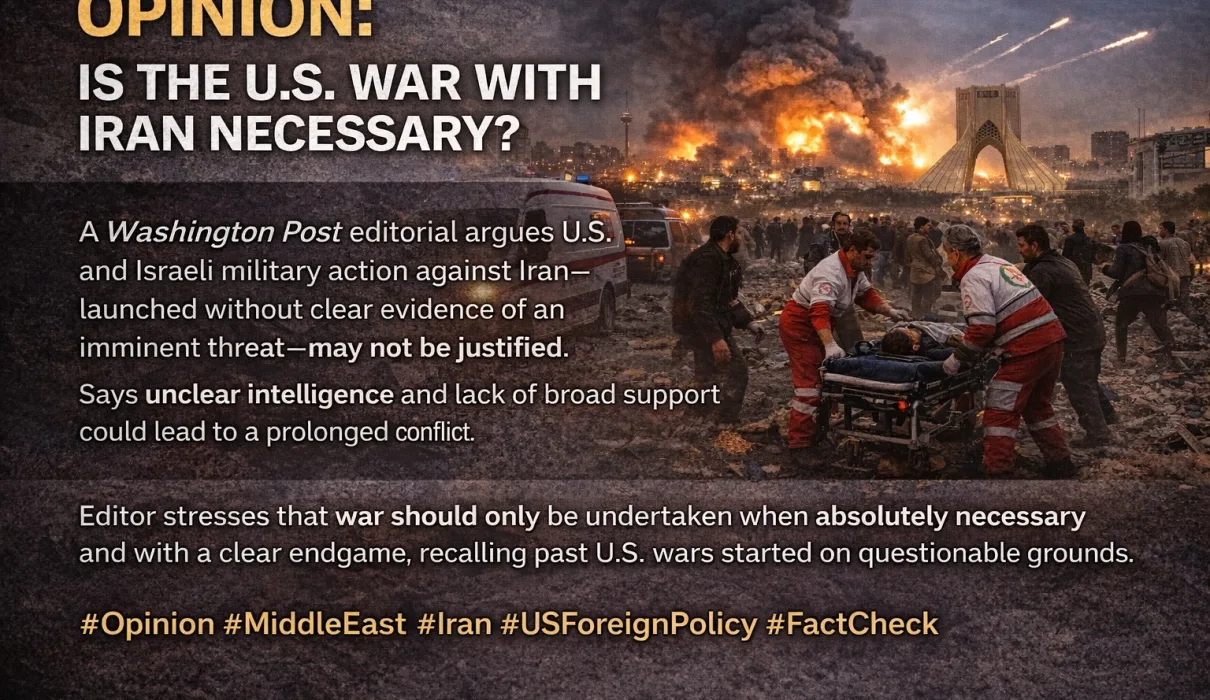
One Washington Post opinion writer, who supported the Iraq invasion and later deeply regretted it, argued that the US should only go to war when it truly has to — not in preventive wars based on uncertain intelligence without a clear exit strategy.

Conclusion
The Trump Iran strikes mark a historic and dangerous turning point in US foreign policy. Whether this operation achieves its stated goals — stopping Iran’s nuclear program and potentially changing the regime in Tehran — remains deeply uncertain. The risks of escalation, regional instability, and a prolonged conflict are real.
TrendingUpdatesToday.com will continue to track developments in the US-Iran conflict as the situation evolves. Stay informed, think critically, and watch this story closely — the consequences will shape the Middle East and US foreign policy for years to come.

❓ FAQs: Trump Iran Strikes 2026
1. Why did Trump bomb Iran in 2026? Trump launched military strikes on Iran primarily over its nuclear program. After three rounds of nuclear talks failed to produce a deal, Trump authorized a multi-day military operation targeting Iran alongside Israeli forces.
2. Did Congress approve the Iran strikes? No. Democrats immediately demanded Congress return to Washington to vote on halting military action. Two resolutions were introduced to challenge Trump’s use of presidential war powers without congressional authorization.
3. What is the US goal in Iran — regime change? Trump suggested the goal includes “freedom” for the Iranian people, which many analysts interpret as regime change. However, experts warn that aerial bombardment alone is unlikely to topple Iran’s government.
4. Will the US get into a long war with Iran? VP JD Vance said there is “no chance” of a prolonged Middle Eastern war. However, foreign policy analysts draw comparisons to the 2003 Iraq War and warn that military conflicts are difficult to control once they begin.
5. How does Iran compare to past US wars in the Middle East? Iran has a much larger population, stronger military, and more sophisticated proxy networks than Iraq did in 2003. It also has the ability to strike US allies in the region, block the Strait of Hormuz, and activate Hezbollah and other groups across the Middle East.
📚 Sources
- The Washington Post – “Trump: ‘Freedom’ for Iran is goal of ‘major military operation'” (February 28, 2026) — washingtonpost.com
- The Washington Post – “Trump’s Iran strikes open a war with no easy exit” (February 28, 2026) — washingtonpost.com
- The Washington Post – “Democrats demand immediate vote to restrain Trump on Iran” (February 28, 2026) — washingtonpost.com
- CNN Politics – “Trump Administration Updates, February 27, 2026” — cnn.com
- The Washington Post – “Opinion: Trump’s rationale for Iran strikes is unconvincing” (February 28, 2026) — washingtonpost.com
- International Atomic Energy Agency (IAEA) – Nuclear Verification Overview — iaea.org