

 By
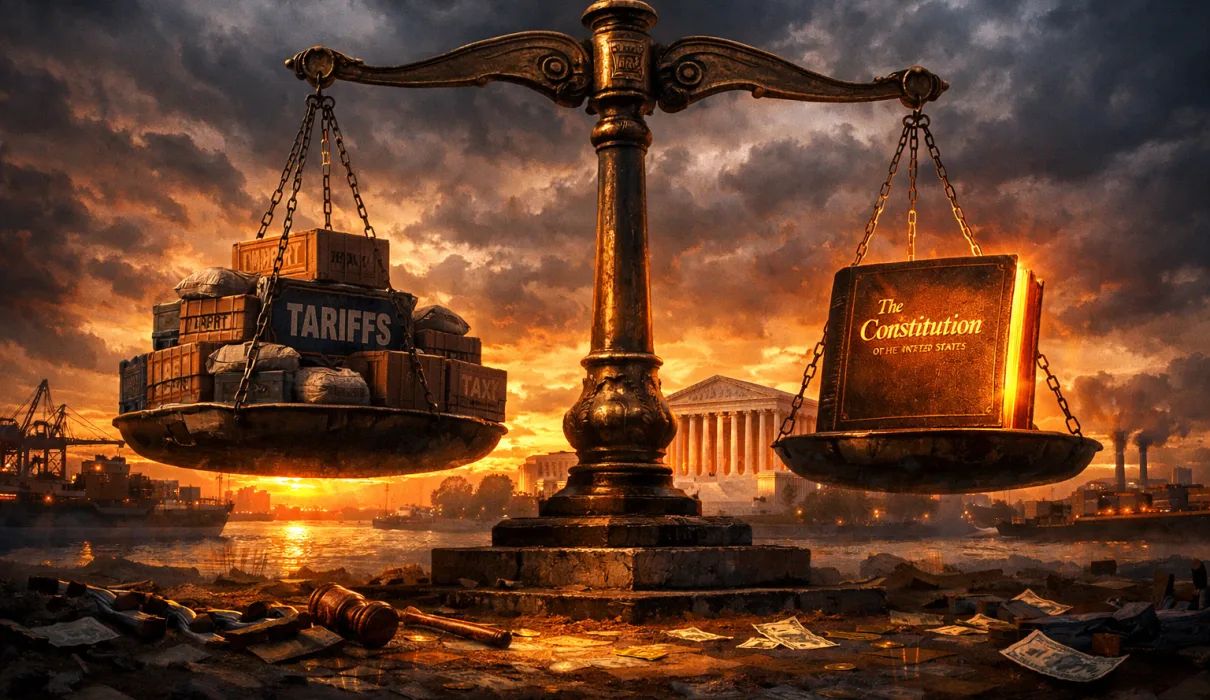
By Supreme Court Strikes Down Trump Tariffs: In a stunning and historic decision, the U.S. Supreme Court has struck down the majority of President Donald Trump’s sweeping tariff program — handing him one of the most significant legal defeats of his second term. TrendingUpdatesToday.com is breaking down exactly what this ruling means, which tariffs were invalidated, and what comes next for American trade policy and the businesses caught in the crossfire.
What the Supreme Court Decided
On February 20, 2026, the Supreme Court ruled 6-3 that President Trump exceeded his constitutional authority by using the International Emergency Economic Powers Act (IEEPA) to impose broad tariffs on imports from countries around the world. The IEEPA, originally enacted in 1977, allows the president to regulate commerce during a declared national emergency — but crucially, it does not explicitly authorize the imposition of tariffs.
The court’s majority held that Trump’s aggressive use of this emergency law crossed a legal line. Remarkably, all six justices in the majority came from the court’s conservative wing — making this a rare intra-ideological rebuke of a Republican president.
Which Tariffs Were Struck Down?
Supreme Court Strikes Down Trump Tariffs: Not all of Trump’s tariffs are invalidated by this ruling. The decision specifically targets those implemented under IEEPA, which fall into two major categories:
| Tariff Type | Status After Ruling | Legal Basis |
| Reciprocal / country-by-country tariffs (e.g., 34% on China, 10% baseline for others) | Struck down | IEEPA |
| 25% tariffs on Canada, China & Mexico (fentanyl-related) | Struck down | IEEPA |
| Steel and aluminum tariffs | Still in effect | Other statutory authority |
This distinction matters enormously. The reciprocal tariff framework was a central pillar of Trump’s trade war strategy, affecting nearly every major U.S. trading partner. Its invalidation creates immediate uncertainty for importers, supply chains, and foreign governments that had been negotiating around these rates.
The Legal Foundation: IEEPA and the Major Questions Doctrine
The Constitution explicitly grants Congress — not the president — the power to set tariffs. Trump’s legal team argued that IEEPA’s broad language delegating emergency economic powers implicitly included tariff authority. The justices disagreed.
The ruling echoes the “major questions doctrine” — a legal principle the same court applied when it blocked President Biden’s student loan forgiveness program. Under this doctrine, executive agencies and the president cannot unilaterally take actions of vast economic and political significance without clear congressional authorization. The court found that using an emergency law to restructure global trade policy simply did not clear that bar.
Supreme Court Strikes Down Trump Tariffs: No president before Trump had ever used IEEPA to impose tariffs on imports. That historical precedent weighed heavily in the court’s analysis.
Who Brought the Cases?
Multiple businesses sued the administration, arguing the tariffs were economically devastating and legally unjustified. Plaintiffs included V.O.S. Selections Inc., a wine and spirits importer; Plastic Services and Products, a pipe and fittings company; and two educational toy sellers. A coalition of states led by Oregon also challenged the tariffs. The Supreme Court consolidated related lower court rulings — both of which had gone against the Trump administration — before issuing its definitive judgment.
According to data from U.S. Customs and Border Protection, IEEPA tariffs had generated approximately $130 billion in revenue through mid-December 2025.
What Happens Next?
The ruling does not necessarily end Trump’s tariff agenda. The White House had reportedly been exploring alternative legal mechanisms to preserve tariff authority even if the Supreme Court ruled against IEEPA. Other trade statutes — including Section 232 of the Trade Expansion Act (the basis for steel and aluminum tariffs) and Section 301 of the Trade Act of 1974 — remain available and were not affected by this ruling.
Trump could seek to reimpose some or all of the invalidated tariffs through these alternative legal channels, though doing so would take time and likely face its own legal challenges. Congress could also act to explicitly authorize tariff powers — a politically complex path given current legislative dynamics.
Supreme Court Strikes Down Trump Tariffs: Conclusion
The Supreme Court’s decision to strike down Trump’s IEEPA-based tariffs is one of the most consequential trade law rulings in modern American history. It redraws the line between executive emergency power and congressional trade authority, with lasting implications for how future presidents can wield economic tools in foreign policy. Whether this ruling ultimately slows Trump’s trade agenda or merely redirects it remains to be seen. Stay with TrendingUpdatesToday.com for continued coverage as this developing story unfolds.
Frequently Asked Questions (FAQs)
1. Did the Supreme Court completely eliminate Trump’s tariffs? No. The court struck down tariffs imposed under IEEPA, including reciprocal tariffs and fentanyl-related tariffs on Canada, China, and Mexico. Tariffs on steel and aluminum — imposed under separate laws — remain in effect.
2. What is IEEPA and why did the court say Trump misused it? IEEPA is a 1977 law that grants the president broad economic powers during declared national emergencies. The court ruled it does not explicitly authorize tariffs, and using it to reshape global trade policy violated the “major questions doctrine.”
3. Can Trump reimpose the tariffs through other legal means? Yes, potentially. Other trade statutes like Section 232 and Section 301 remain available. The White House was already exploring these alternatives before the ruling was issued.
4. How much revenue did the IEEPA tariffs generate? According to U.S. Customs and Border Protection data, IEEPA tariffs raised approximately $130 billion through mid-December 2025.
5. What does this ruling mean for businesses and consumers? In the short term, it creates significant uncertainty. Importers who had been paying tariffs may seek refunds. Supply chains may shift. Longer term, the outcome depends on whether the administration successfully reimplements tariffs under other legal authority.
Sources
- NBC News – Supreme Court strikes down most of Trump’s tariffs: nbcnews.com
- U.S. Customs and Border Protection – Trade statistics: cbp.gov
- U.S. Constitution, Article I, Section 8 – Congressional power to set tariffs: constitution.congress.gov
- Library of Congress – International Emergency Economic Powers Act (IEEPA), 50 U.S.C. § 1701: loc.gov
NBC News – Supreme Court blocks Biden student loan forgiveness (major questions doctrine precedent): nbcnews.com