

 By
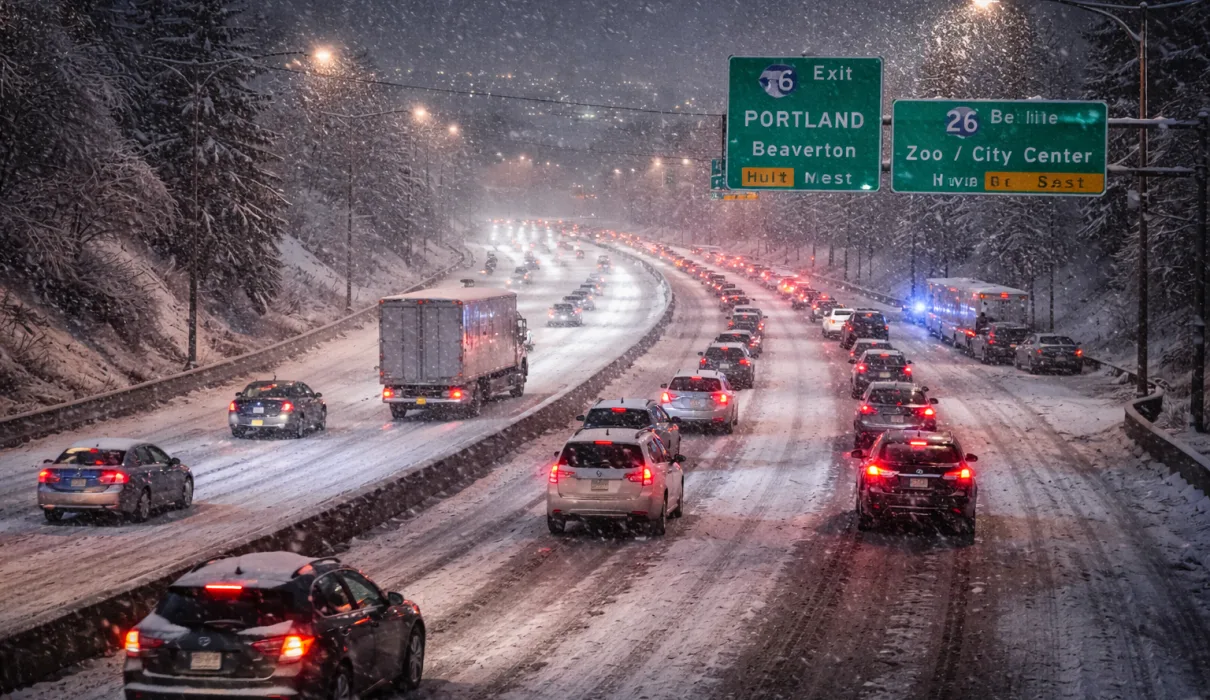
By Portland Winter Weather Road Conditions update When winter storms hit the Pacific Northwest, even a few inches of snow can bring traffic to a grinding halt — and that’s exactly what happened across the Portland metro area on February 18, 2026. TrendingUpdatesToday.com is covering this developing story as slick roads, vehicle spinouts, and a major highway closure disrupted thousands of commuters and travelers throughout the region.
Heavy Snowfall Catches Portland-Metro Drivers Off Guard
Large snowflakes began falling Wednesday evening across the West Hills and as far west as Banks, Oregon, catching many drivers unprepared. While the snow mixed with rain and didn’t accumulate heavily on lower-elevation roads, conditions deteriorated rapidly at higher elevations — creating a dangerous window for anyone on the road.
Portland resident Margaruite McMahon, who was returning from Tillamook with her husband, described the conditions worsening quickly. What started as a scenic winter evening turned into a two-hour standstill on the highway after a vehicle rear-ended their pickup truck. She estimated at least six inches of snow accumulated while they sat waiting.
Highway 6 (Wilson River Highway) Shut Down Due to Slick Road Conditions
Approximately 10 miles west of Banks, the situation became critical. The Wilson River Highway — a key corridor connecting Portland to the Oregon Coast via Highway 6 — was temporarily shut down by emergency crews after multiple vehicles lost control and slid off the roadway.
The Forest Grove Fire Department confirmed the closure in an official statement, noting that snow showers at higher elevations had created dangerous conditions near milepost 35. The department warned drivers to expect significant delays while vehicles were cleared from the road.
This type of closure is not uncommon for Highway 6 during winter weather events, as the corridor passes through elevation changes that can shift conditions from rain to snow within just a few miles.
Areas Most Affected by the February 18 Winter Storm
According to the National Weather Service (NWS), certain locations in the Portland metro were especially vulnerable to snow accumulation, including areas at or below 500 feet of elevation. The NWS specifically identified the following communities as most likely to see accumulating snow:
| Area | Risk Level |
| Longview / Kelso | Elevated |
| Ridgefield | Elevated |
| Scappoose | Elevated |
| St. Helens | Elevated |
| Banks / Timber | High |
| West Hills of Portland | High |
| Chehalem Mountains | High |
These areas are particularly susceptible due to their positioning relative to incoming Pacific moisture systems and their varying elevation profiles, which can rapidly convert rain to sleet or snow.
Winter Driving Safety: What Oregonians Need to Know
Oregon Department of Transportation (ODOT) regularly urges drivers to check TripCheck.com before heading out during winter weather events. Real-time road conditions, camera feeds, and closure alerts are available around the clock. The agency also recommends:
Carrying chains or having all-season tires rated for winter conditions, keeping an emergency kit in your vehicle with blankets, water, and a flashlight, avoiding travel during peak storm windows when visibility and traction are at their worst, and allowing extra stopping distance on bridges and overpasses, which freeze before road surfaces.
The National Weather Service Portland office is also a reliable source for hour-by-hour precipitation and snowfall forecasts during active weather events.
Why Portland Struggles More Than Most Cities in Winter Weather
Portland’s geography creates a unique winter weather challenge. The city sits at a low elevation but is surrounded by hills, mountains, and valleys where temperature and precipitation type can vary dramatically over short distances. When cold air funnels through the Columbia River Gorge while Pacific moisture rolls in from the coast, the result is often freezing rain, mixed precipitation, or rapidly changing snow levels — all within the same metro area.
This meteorological reality means that road conditions can shift from safe to treacherous in a matter of minutes, as was demonstrated on Highway 6 during this event.
Portland Winter Weather Road Conditions Update: Conclusion
The February 18, 2026 winter weather event is a reminder of how quickly road conditions can become dangerous in the Portland metro area when temperatures drop and snow moves in. From vehicle accidents on Highway 6 to closures affecting thousands of drivers, the storm underscored the importance of preparation and real-time awareness. For the latest updates on road conditions, weather alerts, and regional safety advisories, stay connected to TrendingUpdatesToday.com as conditions continue to evolve across Oregon and Southwest Washington.
Frequently Asked Questions (FAQs)
Q1: Why was Highway 6 closed on February 18, 2026? Highway 6 near milepost 35 was closed due to slick road conditions caused by snow showers at higher elevations, resulting in several vehicles losing control and sliding off the roadway.
Q2: Which Portland-area communities were most at risk for snow accumulation? The National Weather Service identified Banks, Timber, the West Hills of Portland, Scappoose, St. Helens, Ridgefield, Longview/Kelso, and the Chehalem Mountains as the areas most likely to see accumulating snow during this event.
Q3: How can I check current road conditions in Oregon before driving? Oregon drivers can visit TripCheck.com, operated by ODOT, for live road condition updates, traffic camera feeds, and closure information across the state.
Q4: Does Portland get significant snow every winter? Portland typically sees limited snowfall, but when winter storms do occur, they can cause significant disruption due to the region’s geography, mixed precipitation patterns, and the relatively limited supply of snow removal equipment compared to snowier cities.
Q5: What should I have in my car during Oregon winter weather? Recommended emergency supplies include tire chains or all-weather tires, water, blankets, a flashlight, snacks, a first-aid kit, and a portable phone charger. ODOT also advises checking the forecast before traveling through mountain passes or coastal corridors.
Sources
- KATU News – Winter weather wreaks havoc along some roads in the Portland-metro area
- National Weather Service Portland – weather.gov/pqr
- Oregon Department of Transportation – TripCheck.com
- Forest Grove Fire & Rescue – Official X (Twitter) statement on Highway 6 closure